
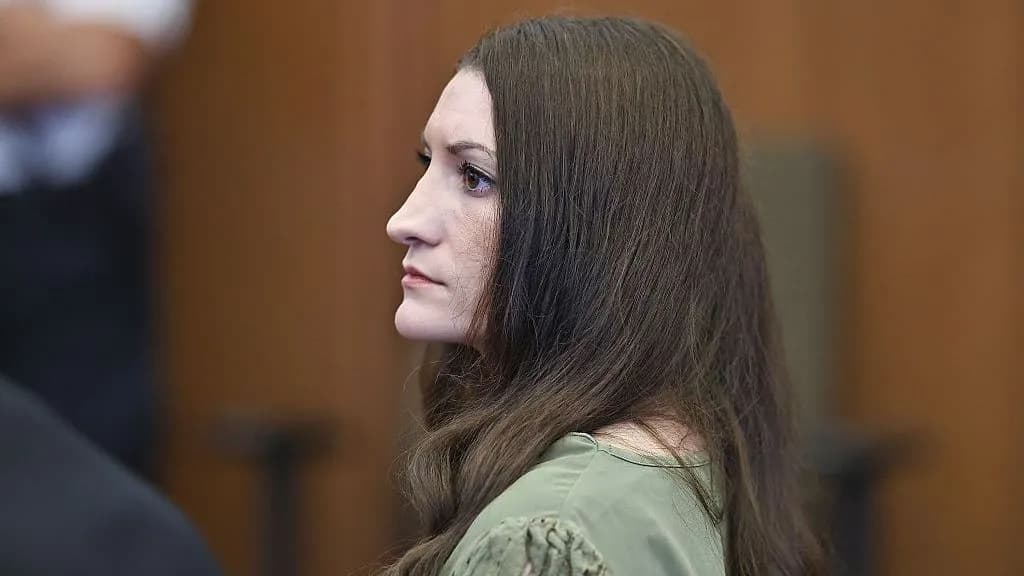
Lindsay Clancy’s defense lawyers are asking a Massachusetts judge to investigate the conduct of the lone holdout juror in her closely watched murder trial. The request follows a mistrial after the jury could not reach a unanimous decision on whether Clancy was criminally responsible for the deaths of her three children.
Defense attorney Kevin Reddington filed a motion asking Judge William Sullivan to examine allegations involving juror Michael Desronvil. The motion raises questions about whether Desronvil used a cellphone during jury deliberations and whether he provided accurate information during the jury-selection process.
The defense is seeking phone records, potential device activity and other information that could help determine whether the juror violated court instructions. Lawyers argue that any improper conduct could have affected the deliberations and the outcome of the trial.
Defense Raises Questions About Juror Conduct
The request comes after a sharply divided jury process. Reports indicated that 11 jurors favored finding Clancy not criminally responsible, while Desronvil was the lone juror who supported a guilty finding.
Clancy’s defense argued that she was suffering from postpartum psychosis when her children died and therefore should not be held criminally responsible. Prosecutors maintained that the evidence supported criminal liability.
The defense motion disputes several aspects of Desronvil’s conduct during deliberations. Lawyers have raised concerns that he may have used a cellphone despite restrictions on electronic devices during jury deliberations. The defense is seeking records that could establish whether any prohibited device use occurred.
Defense lawyers have also questioned Desronvil’s answers during jury selection and are seeking information about his responses to questionnaires and whether he disclosed all information relevant to his ability to serve.
Desronvil has denied wrongdoing and defended his position during the trial. He has said his conclusion was based on the evidence presented in court and disputed descriptions of his behavior during deliberations.
Legal Dispute Over Jury Misconduct Allegations
The defense request raises broader legal questions about how courts handle allegations of juror misconduct after a mistrial. Jury deliberations are generally protected from outside scrutiny, but allegations involving outside information, prohibited communications or violations of court instructions can prompt judicial review.
The defense argues that evidence concerning the juror’s conduct is necessary to determine whether the deliberations complied with court rules. The request also seeks information that could clarify whether any undisclosed information during jury selection affected the juror’s participation in the case.
Desronvil has rejected claims that he failed to properly consider the evidence. Accounts from other jurors have described disagreements during deliberations, while Desronvil has challenged those characterizations and maintained that his decision was based on the trial evidence.
The judge must now determine whether the allegations justify further investigation and whether the requested records and information can be examined as part of the court proceedings.
Prosecutors Consider Whether to Seek a Retrial
The mistrial leaves prosecutors with a decision over whether to pursue another trial. Clancy was charged in connection with the 2023 deaths of her three children, and the case ended without a unanimous verdict following a seven-week trial.
Clancy’s defense has separately asked the court to dismiss the charges rather than allow prosecutors to retry the case. Defense lawyers argue that constitutional protections and circumstances surrounding the mistrial provide grounds for ending the prosecution.
Prosecutors have not agreed to that position and must determine whether to seek a new trial. Upcoming proceedings are expected to address the defense request for an investigation into Desronvil as well as the separate motion seeking dismissal of the charges.
The case has received significant public attention because of the questions surrounding postpartum psychosis, mental-health evidence and criminal responsibility. The court's handling of those issues could also contribute to broader legal discussions about cases in which medical evidence plays a central role in determining criminal responsibility.
Trial Highlights Challenges in Complex Jury Cases
The Clancy proceedings illustrate the difficulty jurors can face in cases involving intent, mental health and criminal responsibility. Jurors are required to evaluate evidence presented by both sides and apply the legal standards explained by the court.
When a mental-health defense is presented, jurors may have to consider expert testimony, medical records and competing interpretations of a defendant’s mental state. In Clancy’s case, the jury ultimately remained divided over how the evidence applied to criminal responsibility.
The defense’s request for a juror investigation shifts some of the focus from the evidence presented during the original trial to the conduct of the jury itself. Courts generally seek to preserve the privacy of deliberations while also addressing credible allegations that outside information or rule violations may have affected the process.
The next stage of the case will depend on the judge’s rulings on the defense motions and the prosecution’s decision about whether to pursue a retrial. Those proceedings will determine whether the case moves toward another trial or a different legal resolution.
Sources: The Independent; New York Post; CTV News